The Proportion Project Study 03 · Fit Studies
+91 83693 81345

Manual 03 · Men's formal trouser fit

Fit studies — a manual

Fit is the difference between trousers that are worn and trousers that wear you. This manual compares five fits, then walks through every zone of the trouser — from waistband to break — so you can recognise balanced proportions in the mirror.

Plate 03.0 — Comparison

Five fits, one outline each

Drawn to the same waist and length, the five fits differ only in how much room they leave through the seat and thigh and how much they taper towards the hem.

Slim fit outline with a narrow tapered leg
SlimClose thigh, narrow opening.
Tailored fit outline with a shaped seat and gentle taper
TailoredShaped seat, gentle taper.
Straight fit outline with even width from knee to hem
StraightEven width knee to hem.
Regular fit outline with roomy thigh and straight leg
RegularEasy seat, roomy thigh.
Relaxed fit outline with generous volume throughout
RelaxedGenerous volume throughout.

Dashed line — knee level. Outlines are illustrative and drawn to the same scale; they are not patterns or measurements.

FitF–S

Slim fit

Men's slim fit formal pants are cut close to the leg from hip to hem. They create the longest, cleanest line of any fit and suit lean and average builds especially well.

Looks right when: the seat is smooth with no horizontal pulling, the thigh lets you take a full stride and sit without strain, and the hem rests with little or no break.

Looks wrong when: pockets flare open, creases radiate from the crotch, or fabric bunches at the ankle because the trouser is too long for its narrow opening.

  • Seat
  • Thigh
  • Opening

Bars show relative visual volume compared with the other four fits — an impression, not a measurement.
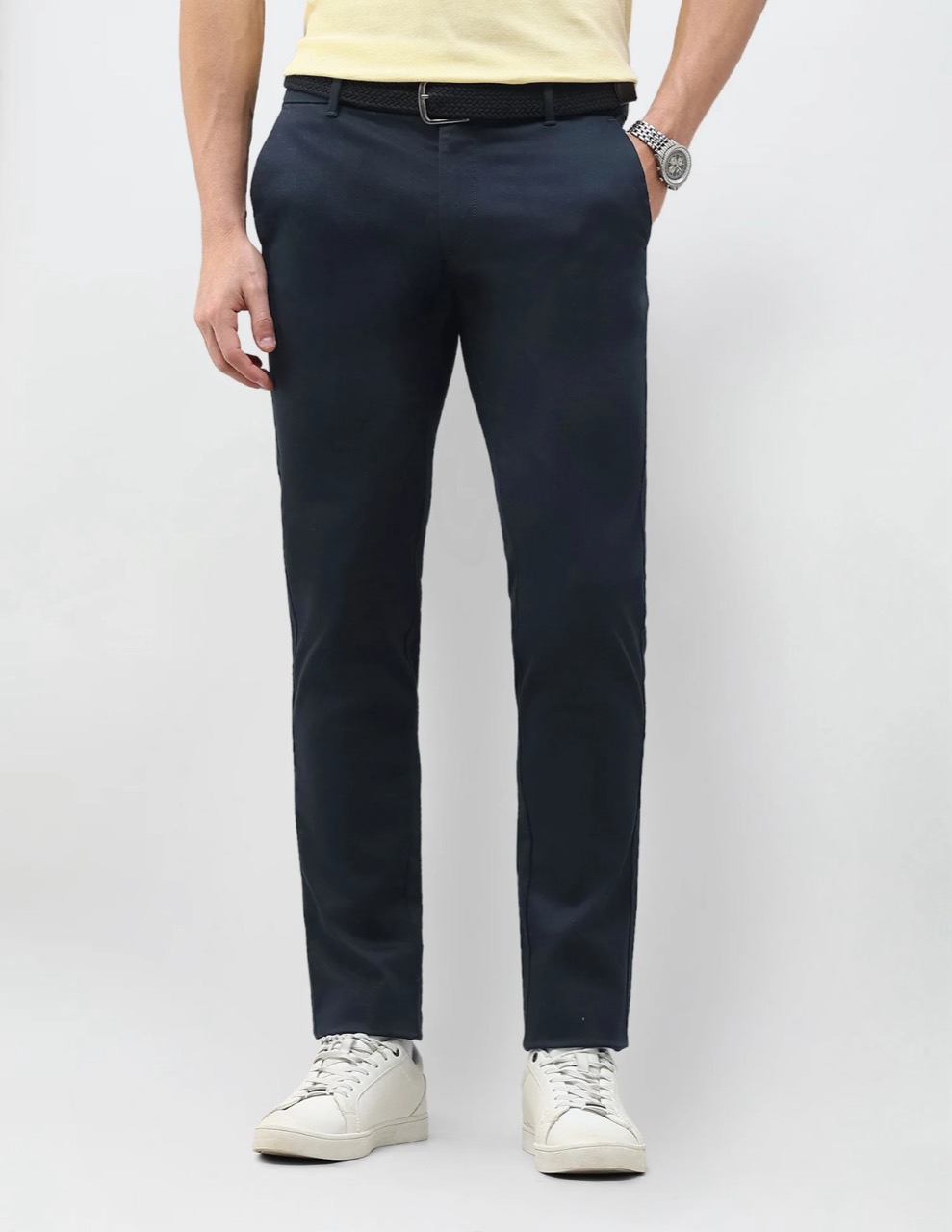
Man wearing navy slim fit trousers with a belt and white sneakers
F–S — Navy slim fit. Clean thigh, narrow opening resting on the sneaker.
FitF–T

Tailored fit

Tailored fit follows the shape of the seat, keeps moderate room through the thigh and tapers gently from the knee. It is the most versatile fit for modern office dressing — precise enough under a blazer, comfortable enough for a full day.

Looks right when: the trouser skims rather than clings, the crease hangs straight when you stand, and the leg narrows gradually rather than suddenly below the knee.

Looks wrong when: the taper is so strong the hem grips the calf, or the seat is cut so close that the back pockets pull open.

  • Seat
  • Thigh
  • Opening
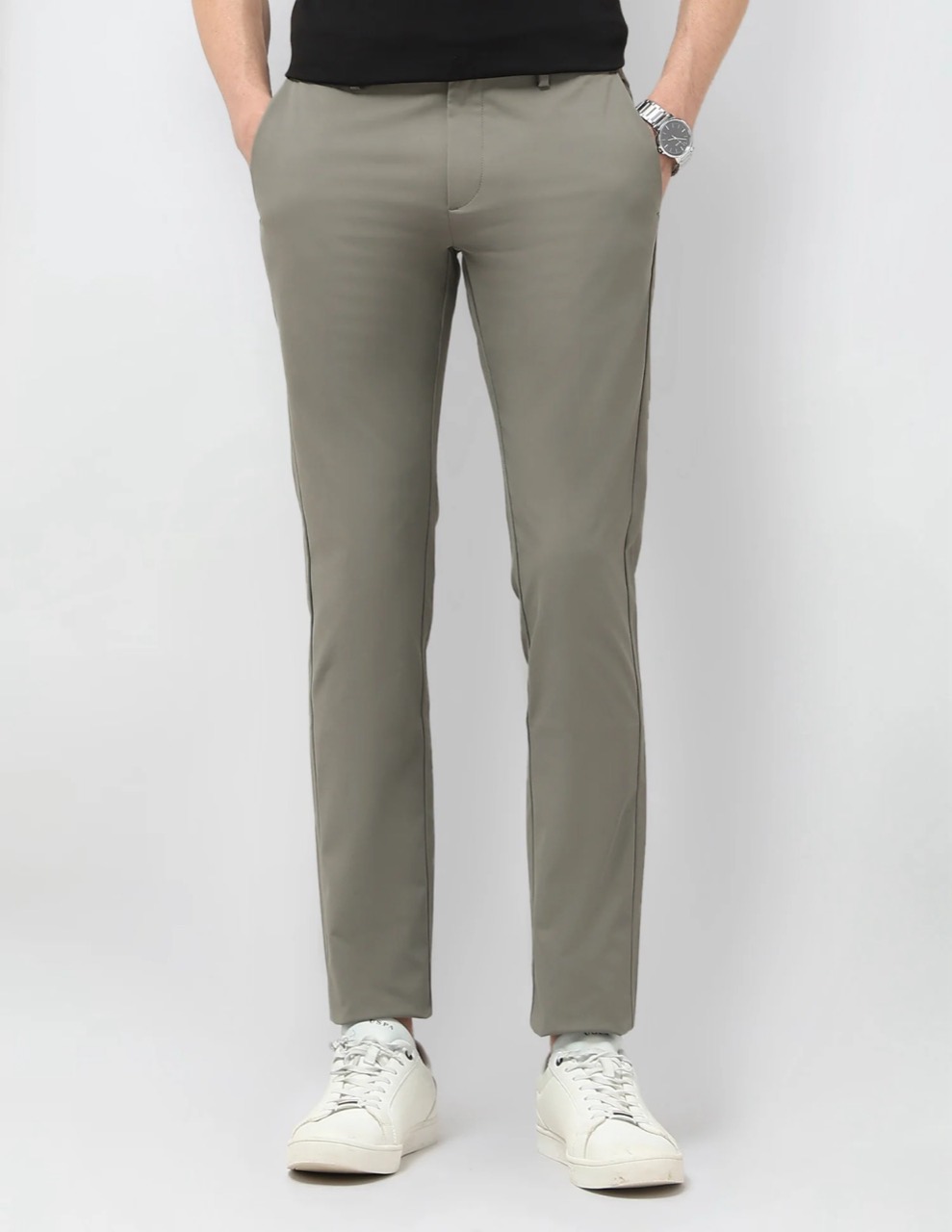
Man wearing sage green tailored fit trousers with hands in pockets and white sneakers
F–T — Sage tailored fit. Hands in pockets, yet the hip stays smooth.
FitF–ST

Straight fit

A straight fit carries one width from the knee to the hem. It looks steady and architectural, and balances broader frames and heavier footwear.

Looks right when: the crease drops vertically over the centre of the shoe and the opening covers the top of the shoe without collapsing onto it.

Looks wrong when: the trouser is too long — a straight leg with too much length forms heavy folds above the shoe.

  • Seat
  • Thigh
  • Opening
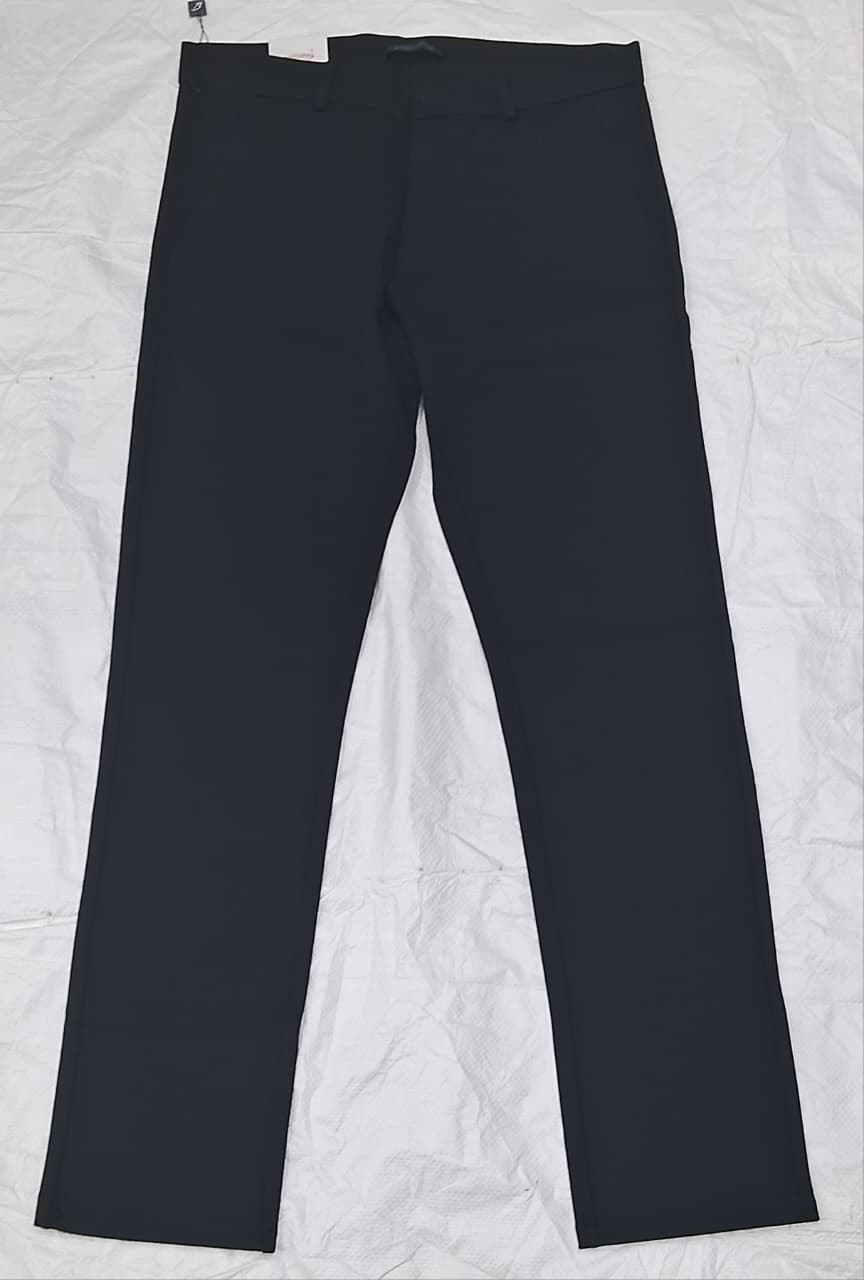
Navy straight fit men's formal trousers laid flat with an even leg width
F–ST — Navy straight fit, laid flat: parallel lines from knee to hem.
FitF–R

Regular fit

Men's regular fit formal pants offer an easy seat and roomy thigh with a straight leg. They prioritise comfort and suit men who sit for long periods, travel often or simply prefer a looser line.

Looks right when: the fabric falls cleanly from the seat without sagging, and the waist sits level without needing to be cinched by a belt.

Looks wrong when: excess cloth folds below the seat, or the waist is so large that the belt gathers the waistband into pleats it was never designed to have.

  • Seat
  • Thigh
  • Opening
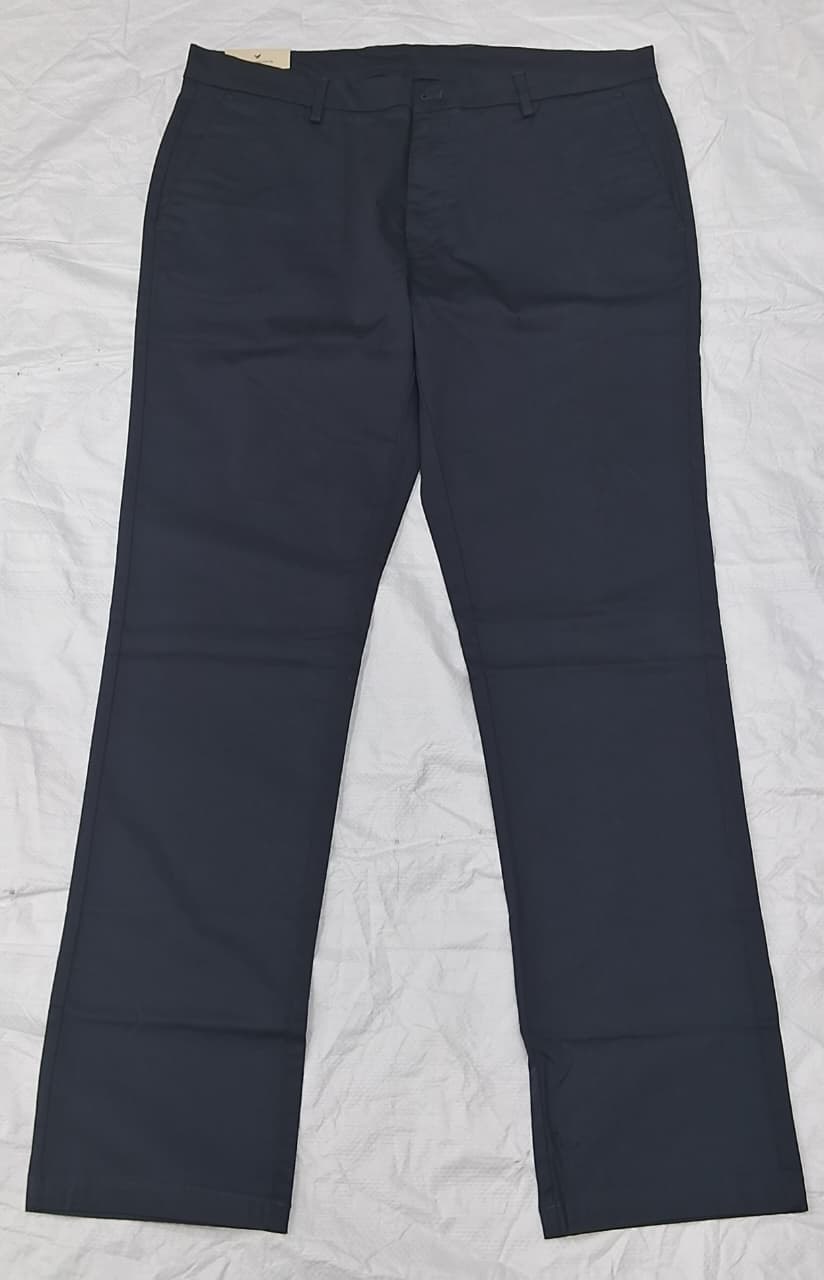
Navy regular fit men's formal trousers laid flat
F–R — Navy regular fit: an easy, straight leg.
FitF–RX

Relaxed fit

Relaxed fit is the most generous cut: full through the seat, thigh and leg. In formal trousers it reads softer and more casual, and works with unstructured jackets, knitwear and summer dressing.

Looks right when: the volume is intentional — the trouser drapes in long, even folds and the waist is still precisely fitted.

Looks wrong when: volume is combined with excess length, or when the trouser is paired with a very slim, short jacket that makes the leg look heavy.

  • Seat
  • Thigh
  • Opening
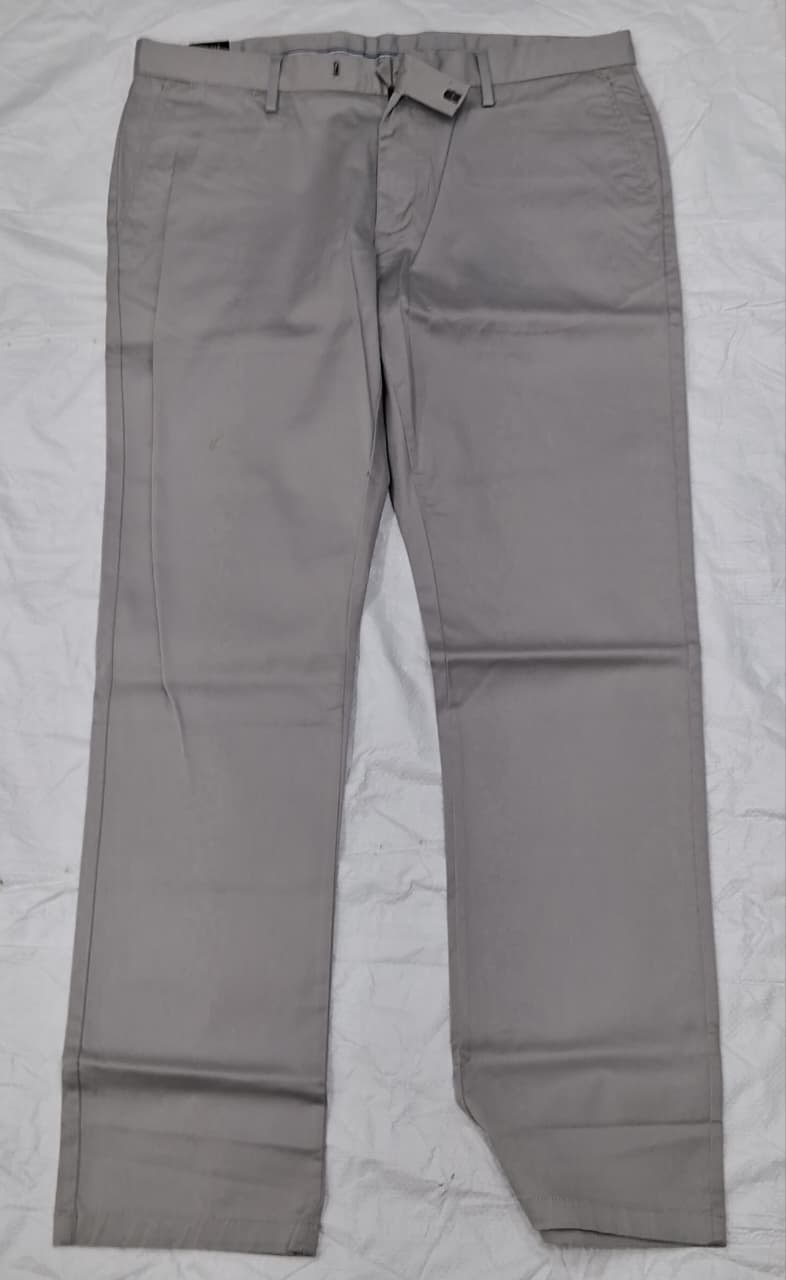
Light grey relaxed fit men's formal trousers laid flat
F–RX — Light grey, relaxed and easy.

Plate 03.1 — Anatomy

Nine zones of a well-fitted trouser

Read a trouser from the top down. Each zone has a visual test you can apply in any mirror.

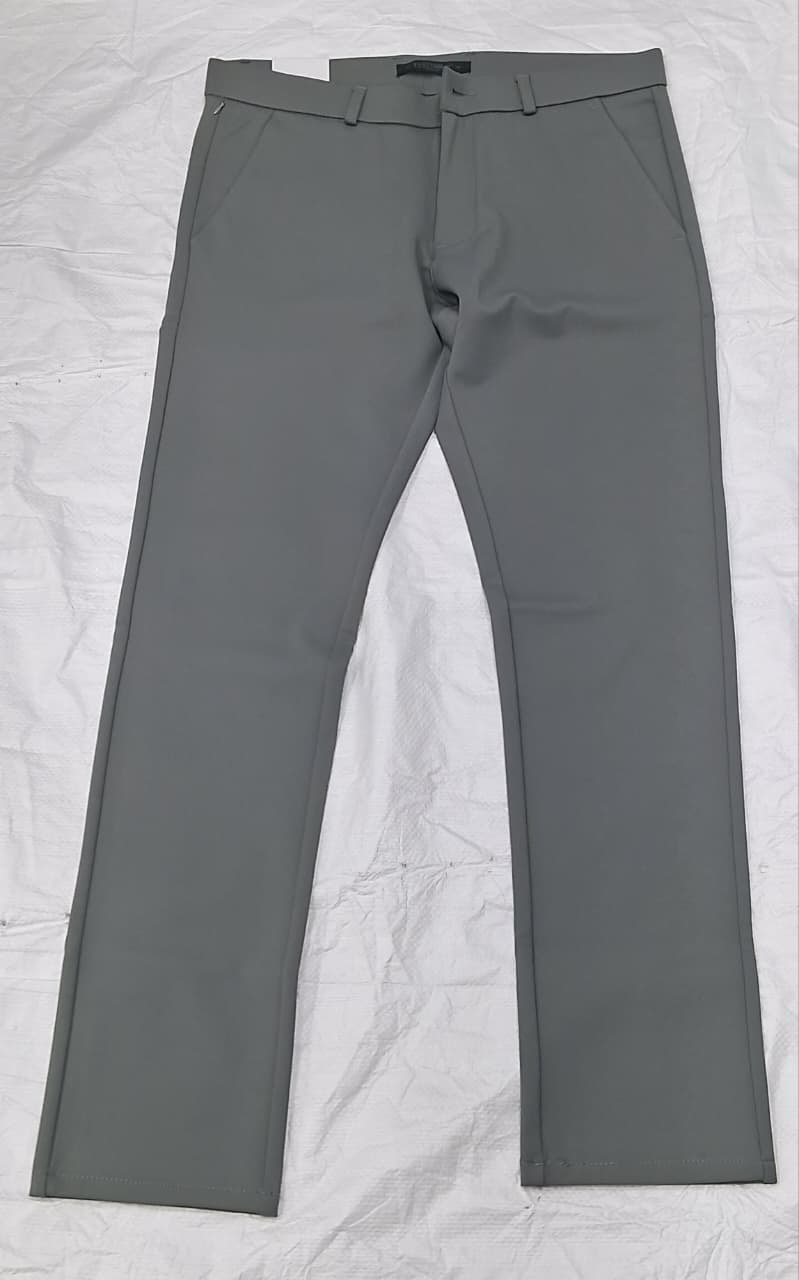
Grey men's formal trousers laid flat, used as an anatomy reference for fit zones
Plate 03.1 — Zones 1–7 marked on a flat-lay. Zones 8 and 9 only appear when the trouser is worn.
  1. 1

    Waist

    The waistband should sit level all the way round and close without strain. You should be able to slide two fingers inside it, and it should stay in place without a belt.

    Test — no gap at the back, no roll at the front
  2. 2

    Hip

    Across the hip the fabric should lie flat. Side pockets are the giveaway: if they spring open when you stand, the hip is too tight.

    Test — pockets stay closed
  3. 3

    Seat & rise

    The seat should follow the body smoothly. Horizontal pulls mean too tight; vertical folds or sagging beneath mean too loose. The rise should let you sit without the waistband dropping.

    Test — sit down; the waistband stays put
  4. 4

    Thigh

    Enough room to stride and sit comfortably, with fabric skimming rather than gripping. Tight thighs produce fan-shaped creases at the crotch.

    Test — take a long step; no pulling
  5. 5

    Knee

    The knee is where taper begins. A well-placed knee keeps the lower leg clean; when you bend, the fabric should release and then recover.

    Test — crouch; the fabric does not strain
  6. 6

    Leg opening

    The hem should frame the shoe. Narrow openings suit sleek shoes; fuller openings balance heavier ones. Too narrow and it catches on the shoe; too wide and it swamps it.

    Test — the hem covers the top of the shoe
  7. 7

    Length

    Length is personal, but it should be intentional. The hem should reach the shoe cleanly — neither floating above it nor pooling on it. Length should always be checked while wearing the shoes you plan to wear.

    Test — check standing, in your shoes
  8. 8

    Break

    The break is the fold where the trouser meets the shoe. No break looks sharp and modern; a slight break is the most versatile; a half or full break is more traditional.

    Test — one soft fold at most, unless intended
  9. 9

    Movement & comfort

    Finally, move. Walk, sit, climb a step, reach for something. A good fit recovers its line every time you stop.

    Test — the crease returns to centre

Balanced proportions — a checklist

Take this list with you when you try on formal pants. If every point is true, the proportion is right — whatever the fit.

  1. The waistband sits level and closes comfortably without a belt.
  2. Side pockets lie flat and closed when standing.
  3. No horizontal lines pull across the seat or the front.
  4. You can sit down without the waistband dropping at the back.
  5. The front crease runs straight down the centre of each leg.
  6. The leg narrows gradually — no sudden taper below the knee.
  7. The hem frames the shoe without catching or swamping it.
  8. The break is the one you chose: none, slight, half or full.
  9. The trouser looks right with the jacket length you will wear.
  10. After walking a few steps, the trouser settles back into line.

Fit is a balance, not a size.

The most important lesson of the fit studies is that no single zone works alone. A waist that fits perfectly cannot rescue a seat that pulls; a beautiful taper is wasted if the length pools on the shoe. Good fit is the sum of balanced decisions from waistband to hem.

Much of that balance is decided at the top of the trouser — in the waistband, the fly, the pockets and the pleats. The next chapter examines those details closely.

For further reading, see The anatomy of a well-fitted trouser and Understanding trouser breaks in the Journal.