Movement & style
Formal trousers spend their lives in motion — walking to meetings, sitting through presentations, standing at events, folding into car seats and aeroplane rows. This chapter studies how they move and how to style them for every part of a professional day.
The sequence below follows the trouser through stride, stance and posture. The timeline then translates those movements into real situations — from the morning commute to an evening occasion — with practical styling notes for each.
The movement sequence
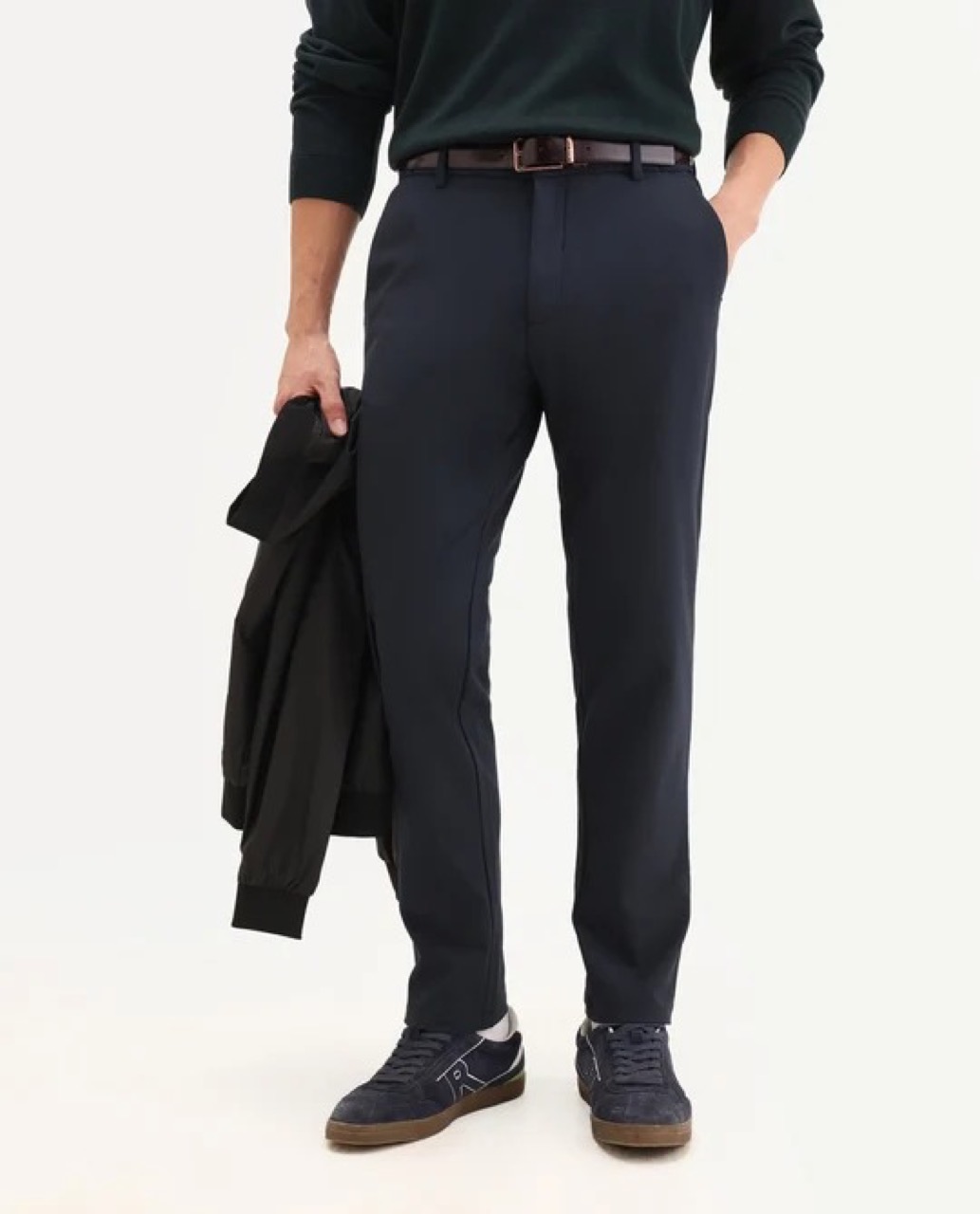
Stride
As the leg swings forward, the trouser must release fabric through the seat and thigh. Notice how the navy trouser lengthens over the front leg without pulling across the front.
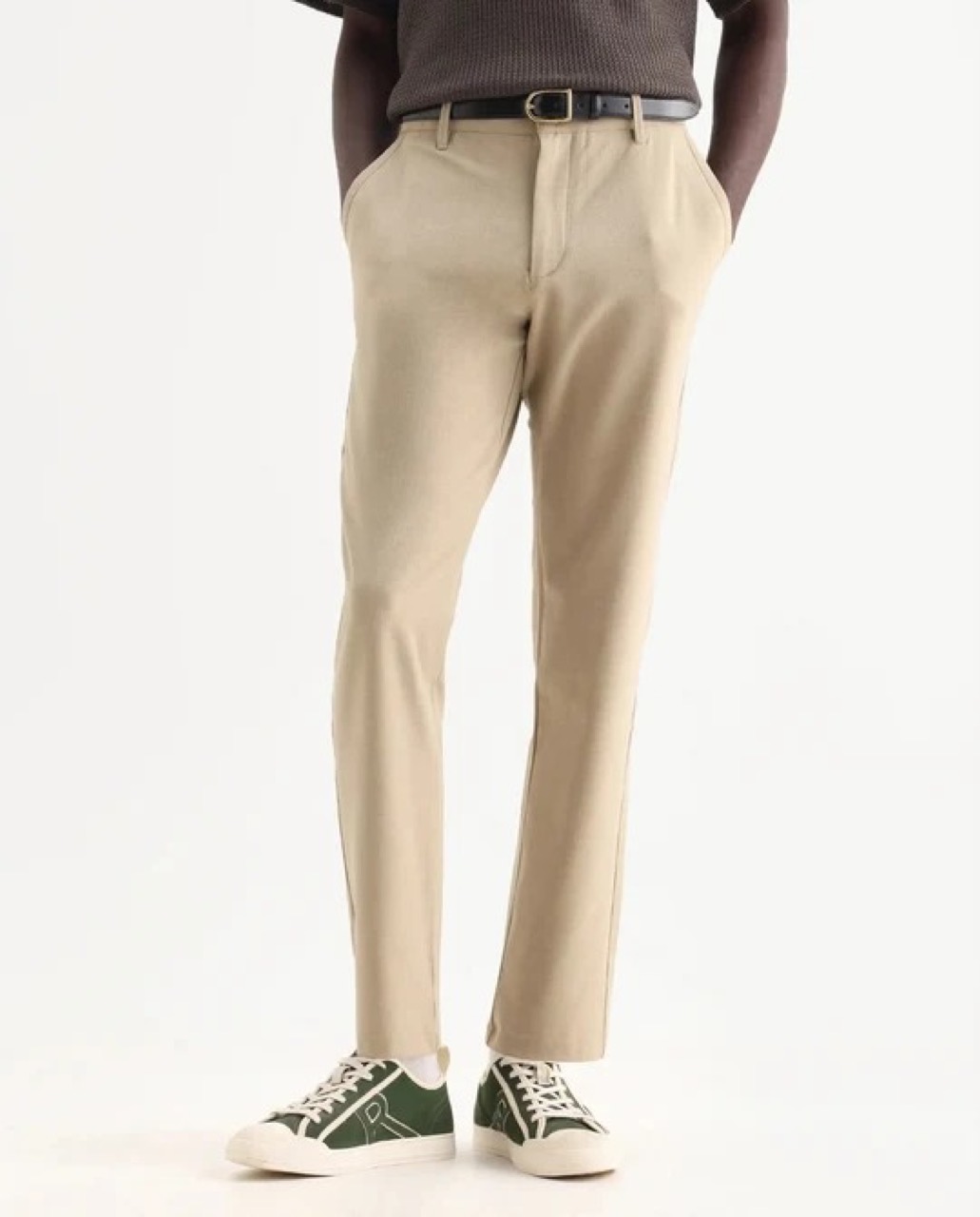
Stillness
Standing is the test of length and crease. The beige trouser hangs straight from the seat, and the hem rests lightly on the shoe.
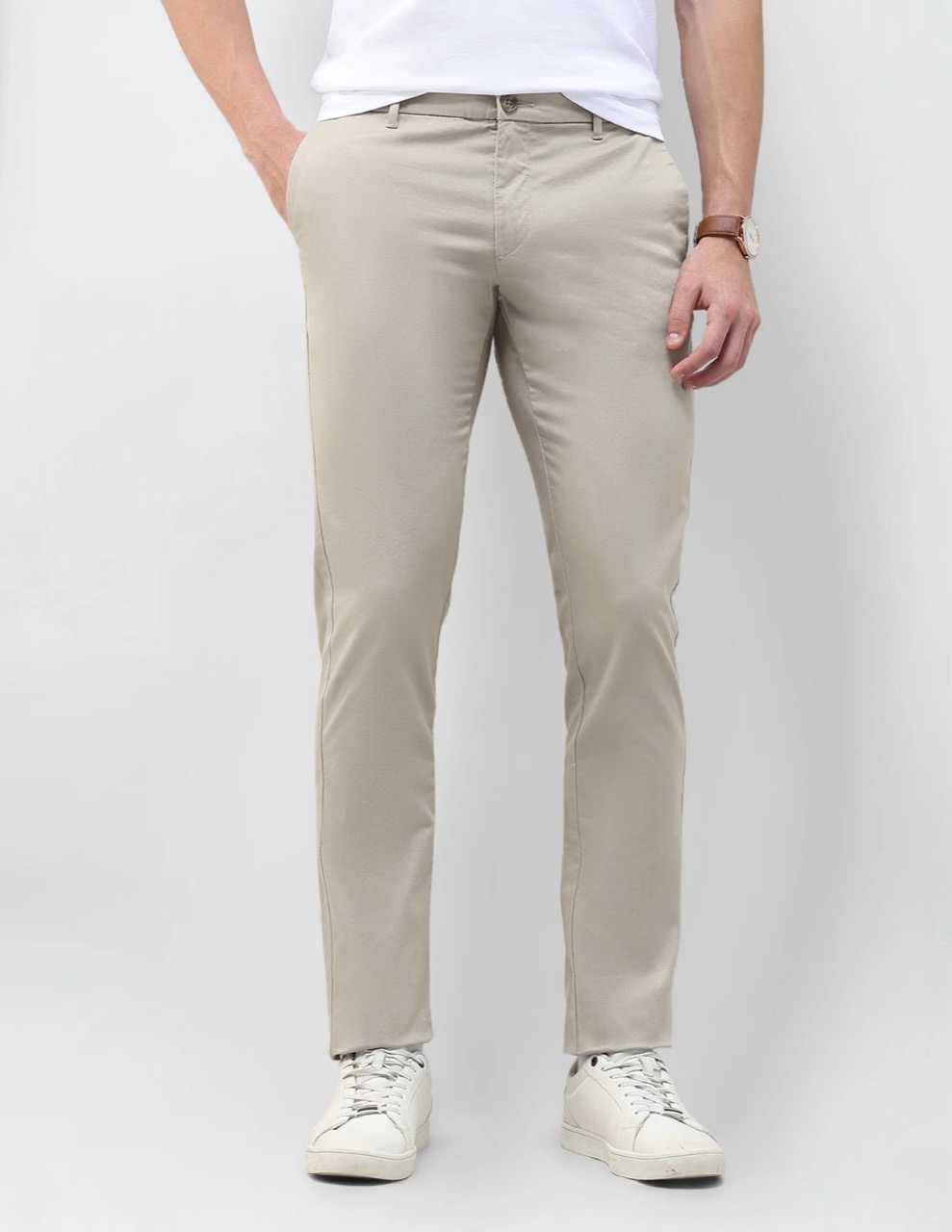
Ease
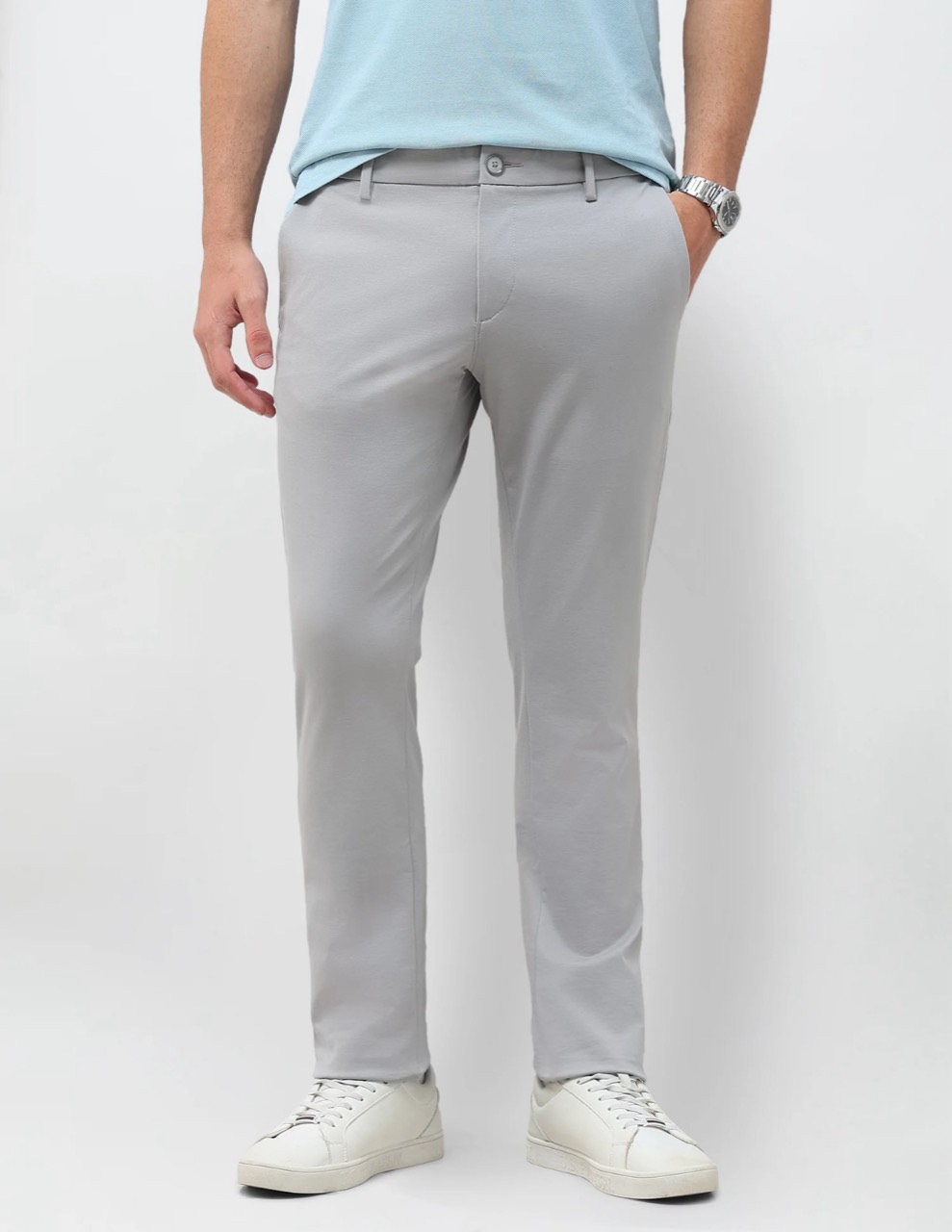
A hand in the pocket shifts the hip. Pockets that stay flat show the hip has enough room for natural movement.
Posture
When weight moves onto one leg, a balanced trouser keeps its waist level and its crease close to centre.
Timeline — a day in formal trousers
A day in motion
One pair of well-fitted men's formal pants can carry you through a whole professional day. Here is what each moment asks of them — and how to dress for it.
- Morning · Travel
The commute
Walking to a station, climbing stairs, sitting in traffic. Choose a tailored or regular fit with enough seat room, and darker shades or mixed-tone surfaces that disguise creases. For frequent business travel, navy and charcoal are the most forgiving colours.
- Morning · Office
Office dressing
The everyday uniform: grey, navy or charcoal trousers, a pressed crease, a formal shirt and leather shoes. The break should be slight, the belt should match the shoes, and the shirt should be tucked smoothly into a waistband that sits level.
- Midday · Meetings
Business meetings
Seated for long periods, often across a table. A rise that keeps the waistband in place when sitting matters more than any trend. Choose quiet colours and a clean flat-front or single pleat; nothing should distract from the conversation.
- Afternoon · Sitting
At the desk
Sitting compresses the seat and lifts the hem. Trousers with a little extra length avoid exposing the shin when seated; a fit with comfortable thigh room avoids strain lines across the lap.
- Afternoon · Standing
Presentations
You stand, walk and gesture in front of others. A tailored fit with a straight crease and a slight break looks composed from every angle. Avoid very slim cuts that pull when you turn.
- Evening · Occasion
Formal occasions
Switch to black or deep charcoal, a sharp crease, minimal break and polished shoes. A matching jacket or a dark blazer completes the look.
- Weekend · Smart casual
Smart casual
Beige, olive, cream or textured formal trousers with a knit polo, an open-collar shirt or a light overshirt. The trouser stays formal; everything around it relaxes.
Coordination
Shirts, blazers & the trouser
Shirt + trouser: contrast in depth
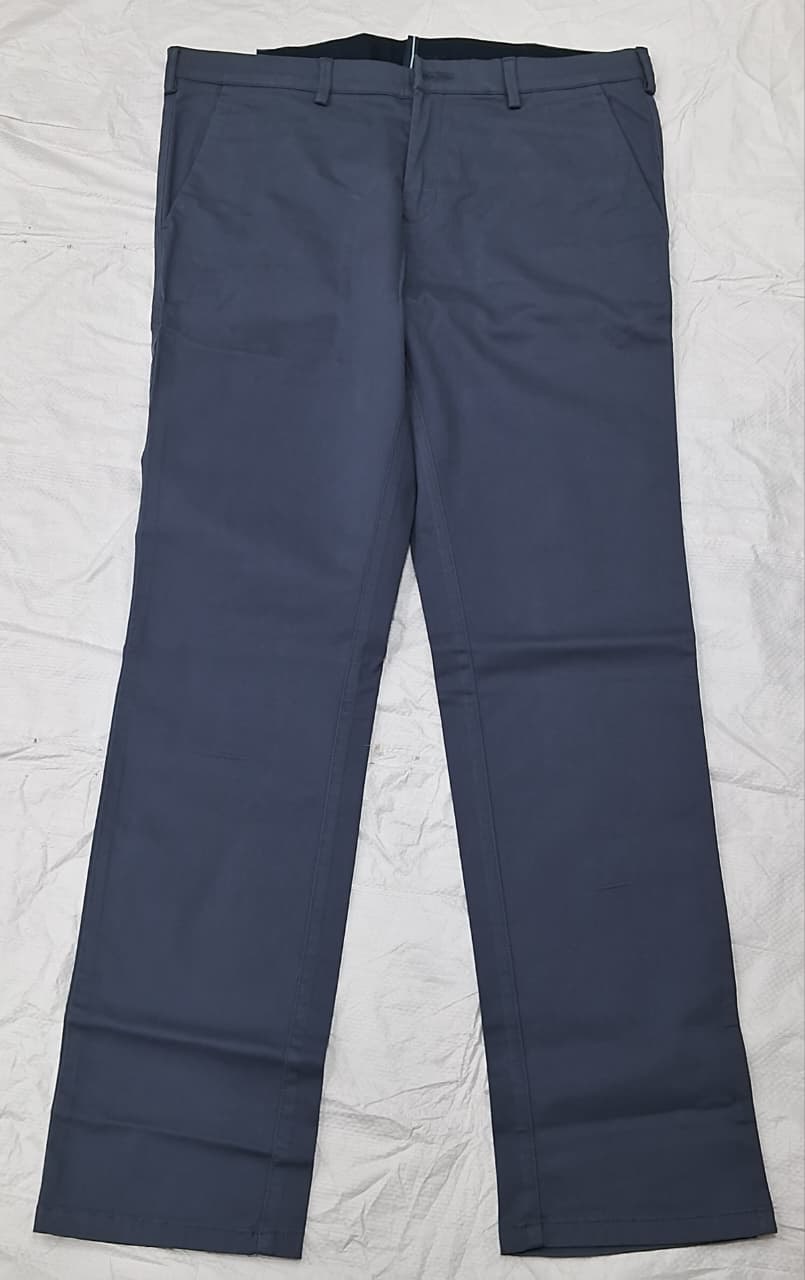
The simplest rule of shirt and trouser coordination is contrast: a light shirt over dark trousers, or a darker shirt over light ones. The waistline then reads clearly and the proportions look deliberate.
Shirt + trouser: the safe palette
White and pale blue shirts work with every formal trouser colour. Pink and lilac flatter grey and navy. Cream and olive shirts warm up beige and brown.
Shirt + trouser: tucking
Formal trousers are designed for a tucked shirt. The waistband should hold the shirt smoothly without the need to pull it tight with a belt.
Blazer + trouser: contrast, not near-match
When combining separates, make the difference obvious — a navy blazer with grey trousers, a brown jacket with charcoal. A blazer that almost matches the trouser looks like a mismatched suit.
Blazer + trouser: length and leg
Shorter, unstructured blazers suit slimmer, tapered trousers. Longer, structured jackets need straighter legs to balance their weight.
Blazer + trouser: texture
Pair a smooth trouser with a textured jacket, or a textured trouser with a smooth jacket. Contrasting surfaces make separates look intentional.
Good trousers move with you
The best formal pants are not the ones that look perfect standing still in a mirror, but the ones that recover their line after every stride, every chair and every staircase. Fit, fabric and construction all serve that goal.
With movement understood, the final variable is colour — the subject of the next chapter.